For quite a long time, almost as long as cinema has existed, movie studios have turned to adaptions to bring them their next big blockbuster, taking stories from the page and putting them on the screen. But despite the practice they’ve had, Hollywood still doesn’t seem to have found a formula for making them good with any kind of consistency.
When you take you ideas from a bestselling book, you know they already work, they’ve been tried and tested, so that should take off some of the pressure. They also have a fanbase ready and waiting to see their favourite characters brought to life in a new way. So how can studios make sure they create something that’s worth the fans time, and doesn’t destroy the source material?
Be faithful
Being unfaithful to the book is easily one of the biggest ways to turn fans against you. Whether it’s The Lord of the Rings, Harry Potter, or even Alex Cross, fans want to see the world they know and love brought to life in a memorable way. They know a lot about these stories, and they can easily tell whether the filmmakers really cared about being faithful, or whether they were just hoping to make an easy movie off someone else’s work.
Of course, it’s not possible to be 100% accurate all the time. Books are very different to movies, and when you’re dealing with a film, you need to have different visual cues to keep the audience in the know. There’s no narrator, or first-person voice that can spell it out, it all has to be shown onscreen or spoke by characters. There’s also a lot of other things to consider, like the budget, the difficulty of making imaginary things real, and the fact that every reader probably has a slightly different idea of what the world looks like.
This is where it really helps if the filmmakers understand what they are adapting, either because they are already fans, or because they take the time to study what they are adapting, so they know what the readers want to see, and how to make it look “real”. If a director is just in it for the work, with no connection to the source material, they probably won’t have what’s needed to make a good adaptation.
There is a case that adaptations can be too faithful, such as was the case with the Percy Jackson show on Disney+. It worked hard to put in as many characters, moments and scenes as it could from the book, things fans would be looking out for, but the problem was that it sacrificed its pacing as a result. There were whole episodes that could be cut, without having much of an effect on the story, and while these were fun parts of the book, they just dragged down the show.
Be original
Originality is the opposite side of the faithful coin, but it’s no less important. No matter how hard you try, you just can’t make a 1-to-1 adaptation. There will always be things that either can’t be brought to the screen, or have to be shifted around to fit the movie’s runtime, or an episodic format, or some such thing.
In these cases, just as is the case with being faithful, if the filmmakers know the source material well enough, they’ll probably be able to make these changes feel natural, and not destroy the story in any way.
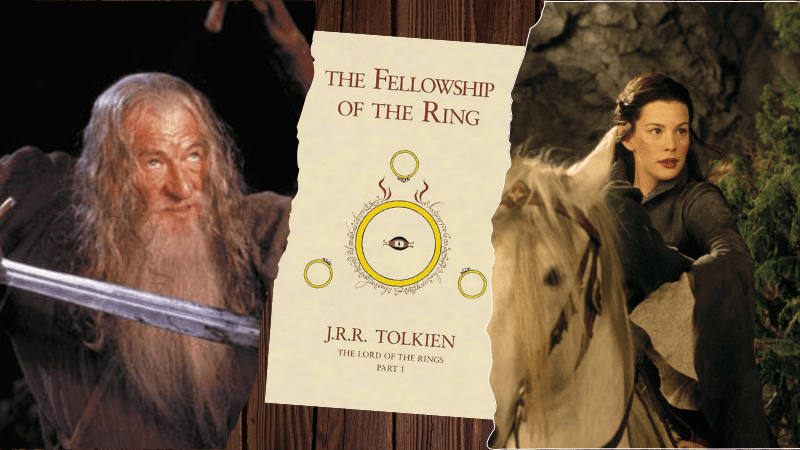
A prime example of this would be Arwen in the Lord of the Rings trilogy. Her part is greatly expanded in the movies than the books, where she’s barely mentioned until near the end. But, because of the different narrative of a movie, using flashbacks and such, and the fact that a romantic subplot is satisfying in these kinds of movies, the writers were able to give her a bigger role, while still keeping her character intact, and not changing the overall plot.
On a side note here, there are times when originality can kind of change a whole book, but still be good. A great example is Steven Spielberg’s Jurassic Park, which bears little resemblance to the Michael Crichton novel, other than its title and basic premise. Characters are wildly different in the movie, large scenes are cut, and there’s a lot less techno-sciency stuff. But the movie is still great, in fact, I’d say it’s even better than the novel (though I saw it first), and is one of Spielberg’s best films, though it’s important to note that it still has key themes from the book, about the power of nature, the hubris of scientists, and Ian Malcolm’s beloved Chaos Theory.
Broad appeal
Now here’s a real hard one to get right, because no matter how big the book is, it’s rare that there are going to be enough fans going to see the movie to make it profitable, especially for an expensive production. So, the only way a film can stand a chance is if it has some broader appeal too.
This might not be too big a problem if it’s just a pretty standard thriller, for example, but when you get into genres like fantasy and sci-fi, there’s often more baggage that needs to be worked in, things a “normie” audience might not be as familiar with.
Having a story that has popular themes, like coming of age, or the hero’s journey, good vs evil, etc, is a good way to get that mass appeal. Even if you throw dragons or magic in there, there’s still a good chance viewers will connect with the main characters, and that will be enough to keep them invested.
It also helps if the filmmakers believe in the story they’re telling, and the strength of the source material, like with the hobbits in LOTR. They might seem odd or unusual protagonists at first, but if they are treated as just a normal part of the world, that’s how the audience will see them.
Be honest
One silly thing Hollywood always does is to try and make everything just like the latest blockbuster. After 2001, every big fantasy movie tried to be the next Lord of the Rings or Harry Potter, instead of doing what those films did and making its own path. While there’s definitely good reasons for these being some of the best-selling books (and films) ever, that doesn’t mean that the only way to get a blockbuster hit is to clone them, and hope for the same results.
There can be different kinds of films within the same genre, and in fact, positioning your movie as similar but still unique can give it a good selling point. As it is, when you take something like Walden Media’s Chronicles of Narnia, they simply copy and pasted the same epic visual style of LOTR, completely ignoring the very distinct, homely, English feel that C.S. Lewis’s work have, and they failed at the box office as a result.
Finally, it might be obvious, but studios still haven’t realised it. If you’re adapting a book, you’re adapting a book, so don’t just try to make a completely different movie while using the brand recognition to try and make it sell. If you want to tell an original story, then do it, and maybe you’ll make the next Star Wars!
Thanks for reading! If you’d like to support me, you can buy me a coffee below.


Leave a Reply