
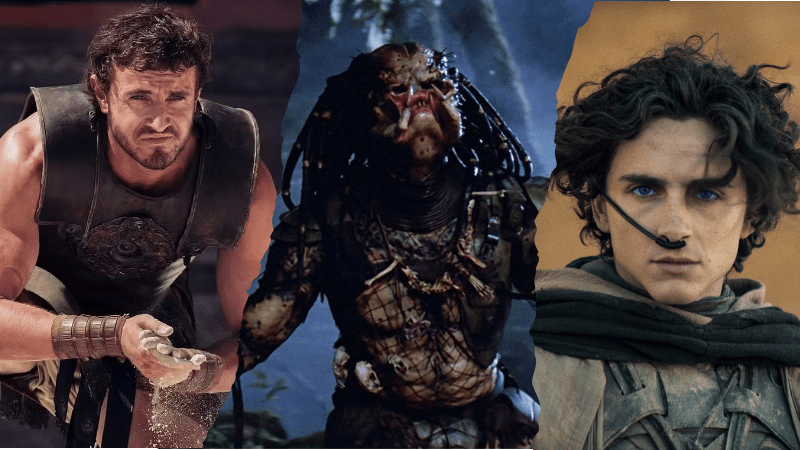
The figures for the domestic (US) box office in 2024 were down just 3% on 2023, which doesn’t sound too bad, all things considered. It’s a total of over $8 billion all told, which sounds like a good number, until you start to look a bit deeper, and see what the numbers mean in detail.
To begin with, while this is down only -3% over twelve months, that doesn’t take into account how inflation could have eaten into that total over the same period. You also have to look into the fact that five years ago, in 2019, the box office brought in over $11 billion. You might be thinking that was just due to films like Avengers: Endgame, but no, all the way back to 2015, the grosses were over $11 billion domestically, every single year.
We also have to look at what kind of year 2023 was. It was a bad time for Hollywood, with the strikes interrupting movie production, and the press tours that accompany every big release. There were also a number of high-profile flops, like Indiana Jones and the Dial of Destiny, The Marvels, and The Little Mermaid, yet still the box office climbed more than 20% from where it had been in 2022, clearly helped by hits like Barbie and Oppenheimer, which came together under the internet craze know as “Barbenheimer”. But there were about the same number of hits in 2024, with Inside Out 2, Moana 2, and Deadpool & Wolverine all making over the billion mark.
So on balance, things could be said to be healthy in Hollywood, at the moment, but when you look at the bigger picture, a better term would be “stable”, and even that could be too optimistic. There’s a lot of bad things waiting over the horizon, and they come down to the problem that’s plagued Hollywood for a while now: new ideas, or rather a lack of them.
Here are the top 10 highest grossing movie of 2024:
- Inside Out 2
- Deadpool & Wolverine
- Moana 21
- Despicable Me 4
- Dune: Part Two
- Wicked
- Godzilla X Kong: The New Empire
- Kung Fu Panda 4
- Vemom: The Last Dance
- Mufasa
Do you see the pattern? All of them are a sequel of some kind, or tied to an existing franchise. Even Wicked, which could be called original, is an adaptation of a musical that’s a prequel to The Wizard of Oz. Putting it simply, there’s nothing new here.
Now let’s look at the next ten highest grossing movies:
- Beetlejuice Beetlejuice
- Gladiator II
- Bad Boys: Ride or Die
- Kingdom of the Planet of the Apes
- Twisters
- It Ends With Us
- Alien Romulus
- Sonic the Hedgehog 3
- The Wild Robot
- A Quiet Place: Day One
A little better here, as there are two originals, It Ends With Us and The Wild Robot. But the other eight are all sequels, as are some of the other big releases this year, like Ghostbusters: Frozen Empire, Joker 2, and Furiosa: A Mad Max Saga.
Now let’s take a quick look at the big releases that have been confirmed for 2025, and bear in mind that more could be announced in the next few months.
- Snow White
- How To Train Your Dragon
- Captain America: Brave New World
- Superman
- Jurassic World: Rebirth
- 28 Years Later
- Tron: Ares
- Another Predator movie
- Fantastic Four: First Steps
- Avatar: Fire and Ash
Now, there’s no telling how well any of these will do, or whether there might be an unexpected original movie that breaks the box office, but more importantly, this is where studios are putting there money, into well-established legacy franchises, and that doesn’t even cover the streaming shows scheduled for 2025.
To be totally fair to the big studios, they’ve always been glad of a franchise that they could rely on; a pre-existing fanbase that would be there to support whatever they released next, hence why they love Harry Potter, Lord of the Rings, or Hunger Games so much. Basing it off a book (or series of books) means you don’t need to think up something completely original, you don’t need to worry about bringing in an audience, and half of your promotion is done by the fans, you just have to do it well enough to satisfy them.
And of course, there have always been sequels, whether it be Indiana Jones, Jaws, Star Trek, or the James Bond movies that have continued long after the books ran out. They all made money, and for the most part have been well received by fans. But in a lot of cases, as with Terminator, the more sequels they made, the worse they got, and eventually damaged the brand so much that any new announcement for the franchise is usually met with either exasperation or apathy.
This is a big problem, as Hollywood is running out of franchises to wring dry. Star Wars, Lord of the Rings, Star Trek, Jurassic Park, Indiana Jones, the MCU, DC, Terminator, Predator, Alien, James Bond, Ghostbusters, Toy Story, Shrek, Pirates of the Caribbean. All of them feel jaded and worn out by now, and it’s hard to get excited for any new announcement about these IPs. Sure, some of them still make money on release, but what kind of a cultural impact do they have? What kind of lasting effect do they have on the audience?
And all of them suffer from the spiral of diminishing returns. Way back in 1979, the first Alien movie made $187 million, a pretty solid $847 million in today’s dollars. Last year, Alien: Romulus made only $350 million. Now no mistake, that was a good return on an $80 million budget, and the mathematics of inflation isn’t so simple, but it’s a startling figure in contrast.
Other legacy movies like Ghostbusters: Frozen Empire and Furiosa were largely failures or at least disappointments, as were the most recent Terminator and Predator movies.
While the box office is an important thing to measure a film by, it’s also important to see what kind of cultural effect they have. Imagine yourself forty years from now, looking back on the 2020s, and having to pick out the movies that were the most important, that really said something about the decade, and will stand as monuments to our era. Would you choose the Dune movies, maybe? What about Barbie, will that age well? Even the big MCU hits like Spider-man: No Way Home are based on a franchise that leads back to 2008, and even further, with the nostalgia hit for the Sam Raimi Spider-Man movies.
There’s not much that stands out about our current output of movies, except that they lack originality and imagination.
It would be easy, by comparison, to choose movies that symbolize the 1980s, like Back to the Future, The Goonies, The Karate Kid, Rocky IV. Films that had a massive impact when they released, and continue to be an influence on our culture to this day, and no doubt into the future.
It could of course be argued that things have changed now. Cinema isn’t what it once was, film is no longer where we go to get our entertainment, or to savour our culture. Instead we have streaming, video games, YouTube and social media, and they will be the markers that we look back on as the biggest parts of the 2020s. But even in the ’80s, there were video games, the arcade, and TV shows, and as the numbers at the top of this article show, cinema still makes big bucks, so that can’t be the whole story.
But let’s say, for the moment, that streaming is the way we now absorb most of our visual narrative entertainment. That’s been a success story, and is often cited as one reason for the decline of cinema (I would say VOD releases are the real reason for that, though), and most big studios have tried to launch platforms of their own.
But as all figures show, most streamers outside of Netflix can’t make a profit, and the way they operate is becoming more like traditional television, with live programs and reality TV taking up more space on their sites.
At the same time, they are suffering from the same problems as movie studios, relying heavily on their big franchises like Star Wars on Disney+ and Star Trek on Paramount+, which makes these IPs less and less relevant, as few people subscribe to their platforms, and it seems that even fewer people now watch these shows.
Things like Star Wars: Skeleton Crew and Amazon’s Rings of Power, should be the biggest shows around, but they are practically niche at this point, and completely ignored by the wider public, who know and care little for them.
You can argue that this is down to the quality of the shows being produced, which is certainly true for some, but at the same time, that could be seen as a symptom that these franchises are becoming worn out, and can’t be relied on to bring in viewers anymore, so that even when something half decent does show up, there’s no one left to care.
Even over at Netflix, which has had massive hits with their originals, they are compounding on their biggest properties, with an unnecessary Squid Game season two, and plans to make spin-offs to Stranger Things when that series comes to an end.
And how long will any of these shows remain in the public conscious once they are done? Will people choose to watch them once there’s no new season to be excited for, and when they only trend on social media for a couple of weeks when they are binge dropped all at once, before disappearing?
Much like social media, they just get lost in the stream of constant content, as the feed refreshes, and something new comes along to satisfy viewers, or one bad season puts them off watching again.
To say that something was a streaming success is so much to say that a few million people might have watched it, and considering the sketchy way “minutes watched” are reported means it’s hard to see exactly how big they really were. The cultural moment is short, and very few get out across the whole of society, so you could say a quote or mention a character and people would instantly know what you meant. Who knows how this will end up once the generation raised on TikTok is in charge of commissioning new shows, unless there is some kind of renaissance of the classic TV format, I don’t think that streaming offers much hope for the future.
While sequels might be the biggest things making studios money at the moment, they are also going to be their doom eventually, if things don’t change.
As mentioned, the biggest reason for making another sequel is that there’s a fandom there, ready and waiting for a new project, but how long will that last? The current audience for things like Star Wars is aging out. Most people find their favourite franchises when they are kids or young adults, and then stick with them for the rest of their lives, so that even forty years later, they will still pay to see a movie set in the same universe, and so it’s worth the while for studios to make things that will appeal to them, with nostalgia-bait of movies like Alien: Romulus and Ghostbusters: Afterlife, which appeal to long-time fans of these works. But there’s not much longevity in them, and they don’t pull in new, younger audiences.
How many kids now care about things like Star Wars? What’s the relevance of these brands with young people? Practically nothing, as viewing figures show, and it’s not likely to get any better, as there’s the incredible paradox happening, of studios like Disney treating these properties as exclusively legacy-based, while also making things that destroy that legacy, like The Last Jedi and Kenobi.
It’s essential that young people have their own franchises that they can grow up with, and return to in thirty, forty, fifty years, while passing on their love for them to their kids, but they aren’t being given anything real to get interested in, and naturally, when there’s so much else to take their attention, on the insistent social media platforms and apps, they find other interests.
Take a look at how LEGO, a particularly smart company, focuses its efforts. Most of their sets focus on old movies, like the Lord of the Rings or the Original Trilogy, rather than something like Rings of Power. Yes, that’s partly because they have the rights to these things, but also because it’s what sells, mainly to more mature collectors, as the sets become increasingly complex, to be displayed rather than played with, showing where a lot of the market lies. LEGO’s always been pretty savvy about what they licence, and the fact they are choosing these over new titles is a god pointer of where things are going.
Once this audience ages out, what will happen to these franchises? Will there be any new fans to replace them?
More to the point, what will happen to cinema when there are no big, original titles to step into their place, and really get people coming back to theatres?
There are two ways to correct here: on the one hand they can try to fix these franchises, by finding that perfect balance between pleasing the old fans, who are you core audience, and appealing to new viewers at the same time. This is something that, so far, studios have failed to do, so it seems unlikely they will rectify their mistakes any time soon, and that assumes that the old fans would be willing to come back anyway. After all, if streaming gives us one thing, it’s the ability to watch the classics anytime, anywhere, as often as we like, so why bother returning just for more disappointment?
The other option is to replace these franchises, or at the very least to build new ones alongside them, that will stand them in good stead for decades into the future, with their own dedicated fandoms
I wouldn’t say there are many ready and waiting. Dune has probably run its course, if Dune: Prophecy is anything to go by. The Monsterverse seems to be ridiculously popular, but even that’s been around for a decade, and has its roots back in the 1930s with King Kong. They also have the feel of forgettable entertainment, to be watched once, then completely ignored.
Maybe there will be a big new franchise waiting just around the corner to surprise us, or a book series that will become the next Harry Potter about to be published, and there are several released this year that will be big tests as to whether the titan franchises like Marvel and DC have any hope.
But even if they are successful, it won’t be a proper solution, just a delay to the inevitable. If Hollywood wants to be around in a few decades, and especially if it wants to make the kid of films that define a generation and stand the test of time, then it needs to get to grips with this problem, and get to grips as soon as possible, to save itself from total obsolescence
Thanks for reading. If you found this article interesting and would like to support my writing, you can visit my Buy Me A Coffee page below.
- Though it was released in November 2024, it didn’t actually cross $1 billion until January 2025. ↩︎
You might also like to read this related article: Nostalgia and Self-Reference in Movies

 Films and Fiction
Leave a reply to Terminator Won’t Be Back Cancel reply