
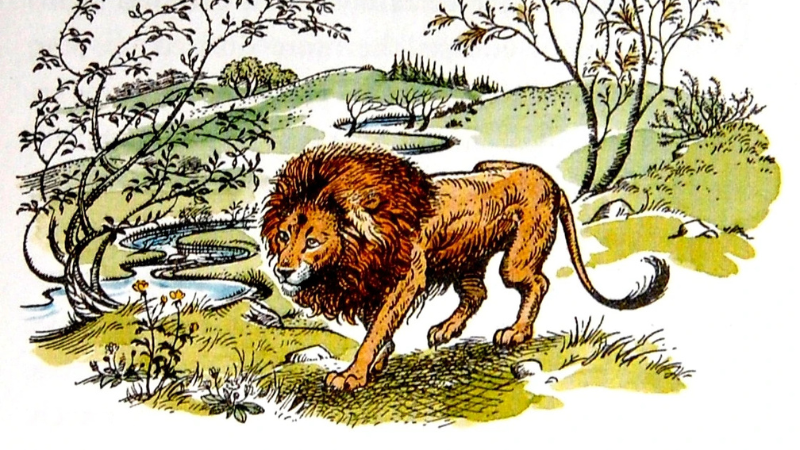
Another week brings another disaster waiting to happen in Hollywood. This time it’s the news that Aslan will potentially be played by Meryl Streep in the upcoming adaptation of The Chronicles of Narnia from Netflix.
Just to be clear here, this is not yet certain. It has been confirmed that that Netflix is in talks with Meryl Streep for the role, but nothing’s been finalized, and they could yet change their mind, but the very fact they are considering it points out some big problems with this production and its authenticity to C.S. Lewis’s books.
It’s such a strange bit of news, coming just a few weeks after the outcry over the HBO Harry Potter show not casting a book-accurate Snape, and then the disaster of the updated live-action Snow White movie from Disney, which bombed at the box office. You think Netflix might have read the room a little better.
But you could say, “does it really matter if they cast an actress for the role?” Yes it does, for several reasons.
If the producers of the movie are so willing to change this one thing, and it’s by no means a small thing, what else are they willing to change? What might they add to “bring it up to date”, or remove to appeal to a modern audience? This could be just one small change, or it could be a hint at just how unfaithful this adaptation will be.
Even if you think Streep is a good choice for the role, there’s still no good reason for doing this. She’s not the only actor in the would who could play Aslan, and there’s no interpretation of the books that could lead you to unequivocally make her your first choice. In fact, it’s the complete opposite.
There have been some strange things said in response to this news, such as Aslan “normally” being portrayed as a male, but even more odd, that it’s not known whether Streep will be playing a female version of the character or not. Why wouldn’t she? It would be much stranger to see Aslan voiced by an actress but not depicted as a lioness.
A big concern about this change is how it will affect the character of Aslan, particularly his voice. So many times in the Chronicles, it’s pointed out how deep his voice is, or how it comes close to a growl when he’s angry. Obviously lionesses growl and roar too, but the way his voice is described makes it seem more like what a real lion might sound like if it could speak.
Undoubtedly, as this piece on NarniaWeb points out, another key part of Aslan as a character is his mane. It’s constantly referred to, glittering in the sun, reflecting the light, or even being the source of it. Lucy and Susan bury themselves in it when they are upset. You remove all of that, and lessen the image of Aslan as the King of beasts, powerful, graceful and impressive, with the mane in place of a wreath or crown as a symbol of authority. A symbol that’s cruelly removed by the White Witch when she humiliates Aslan before his death on the Stone Table in The Lion, The Witch and The Wardrobe, a memorable scene from the books.
Naturally enough, given the purpose of these books, there’s another good reason why Aslan shouldn’t be female, he’s Jesus Christ. I mean that in the literal sense, not as an allegory or Christ-like figure, or a simile of Him, but another manifestation of Him. As Alsan says in The Voyage of the Dawn Treader, when asked if he’s in our world too:
“I am. But there I have another name. You must learn to know me by that name. This was the very reason you were brought to Narnia, so that by knowing me here for a little, you may know me better there.”
The way Lewis looked at these stories was not as an allegory, but more like a “what if?” What if there were another world, where there were talking beasts in place of humans, and the Gospels were retold there too? What might Aslan look like, and how might those events play out?
These are all essential points, but there’s one thing I’ve not yet seen brought up in all the many posts and comments on this, and that’s how him being a male lion, no matter his character origins or imagery, will change everything in these stories.
Aslan is many things to the people in these books. He’s a teacher, a guide, a guardian. But the way he treats the central characters, the children, would change if he were female. He wouldn’t be a strong, fatherly presence for Lucy, who can comfort her when she needs it.
He wouldn’t be a commanding figure to Peter, guiding him to make his first kill in Maugrim the Wolf. It would be a very different scene when he “un-dragons” Eustace. Everything is different, as much as it would be if you made Lucy into a boy, or the White Witch into a wizard.
Clearly the fact that the creators of this new movie (which looks like it will be The Magician’s Nephew) don’t understand why all of this is important to these stories. If they can’t grasp that, then I don’t have any confidence they will do any better with the rest of the adaptation.

 Films and Fiction
Leave a comment